


You paid for the click. The customer picked a product, reached checkout and entered their card. Then the payment failed.
A second processing route can give that sale another chance. Shopify now documents a setup that keeps a direct third-party provider as the main card processor and uses Shopify Payments to recover eligible failed transactions.
That is a useful addition. Before enabling it, merchants need to understand the coverage, the cost and the controls they still need elsewhere.
How Shopify's payment fallback works
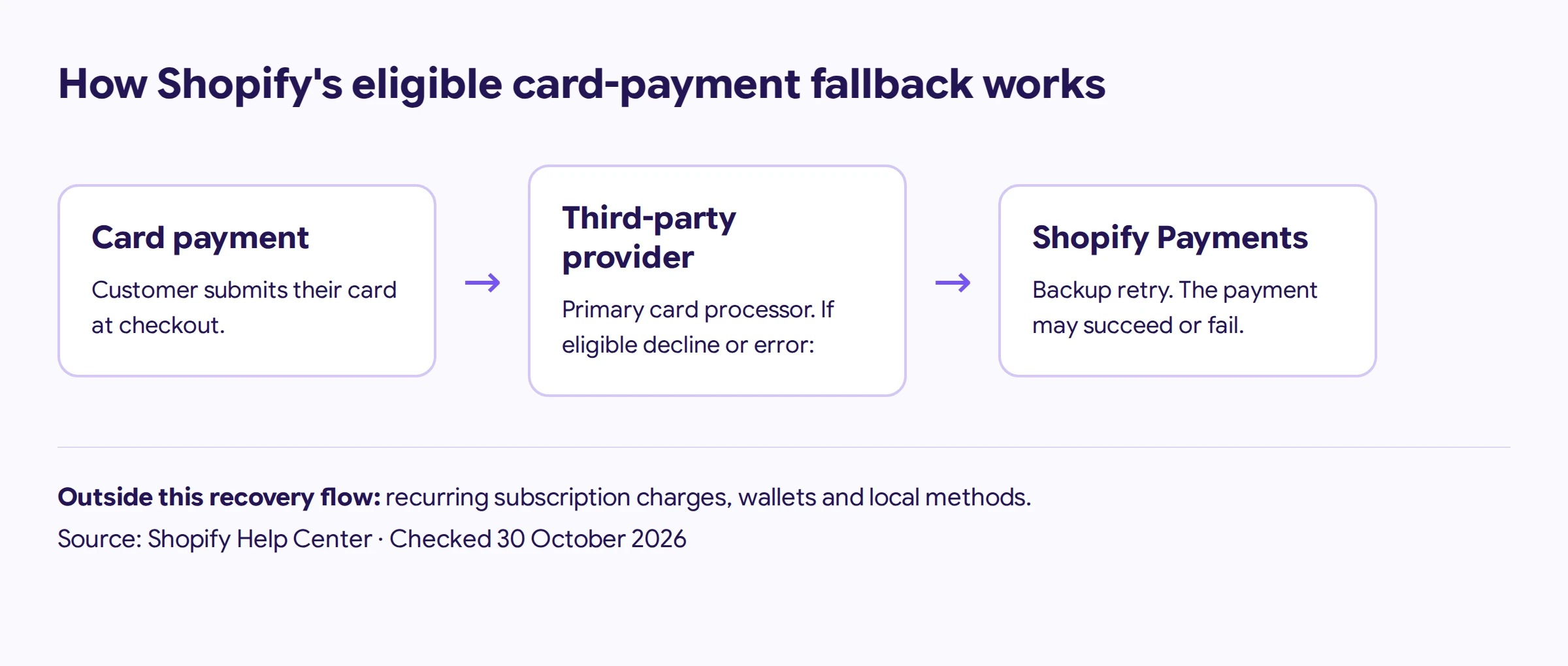
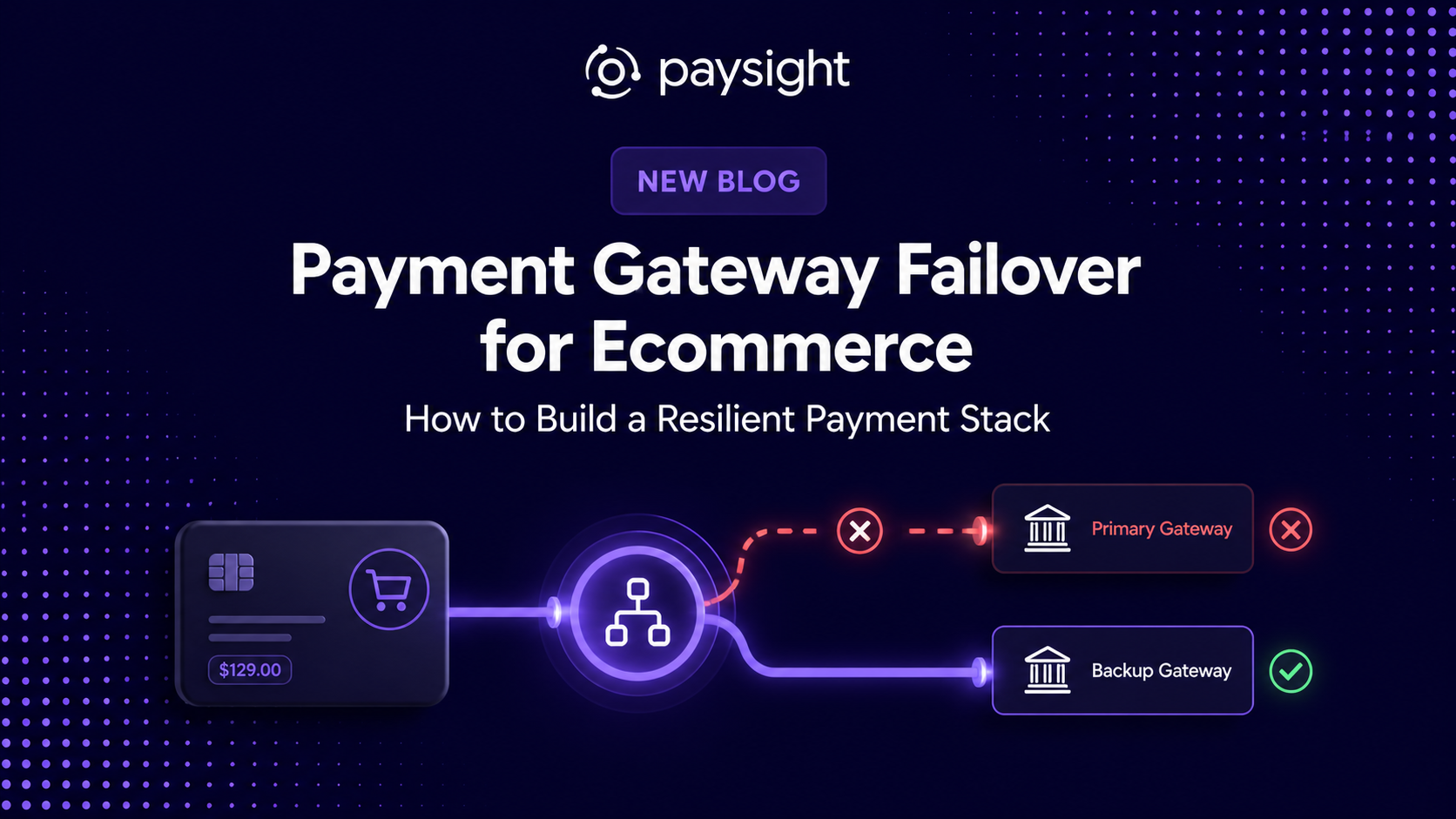
In this combined setup, the third-party provider handles cards first. Eligible declines or errors can trigger a retry through Shopify Payments. Recovery is automatic and cannot be configured or independently switched off.
One direct third-party provider can operate alongside Shopify Payments. Recurring subscription charges, wallets and local methods do not receive this backup retry. Multi-entity setups are excluded. Contracted Plus stores must request early access; other plans have access according to Shopify's current documentation. Merchants need a supported location and Shopify Payments verification.
Source: Shopify's requirements and recovery rules, checked 30 October 2026. Shopify's documentation confirms availability; we have not independently established the feature's original launch date.
What the 1.25% premium actually means
In this configuration, transactions processed through Shopify Payments carry its standard processing rate plus a 1.25% premium. This also applies to methods such as Shop Pay and local payments handled by Shopify Payments, not just recovered cards. Standard rates depend on the plan and market.
Transactions processed by the third-party provider remain subject to Shopify's plan-based third-party transaction fees, alongside the provider's own charges. Shopify's fee documentation explains the distinction.
The table shows the premium alone. It excludes standard processing fees and any other applicable charges.
| Volume subject to premium | Additional 1.25% |
|---|---|
| $100 | $1.25 |
| $10,000 | $125 |
| $100,000 | $1,250 |
An extra fee can be worthwhile when it saves a profitable order. Evaluate the cost across your actual payment mix. For a consistent calculation, see our guide to effective payment processing rates.
Measure recovered profit, not just recovered sales
Our recommendation is to start with successful recovered orders and their value, then account for processing, product costs, fulfilment, refunds and eventual disputes. A recovered order only helps if enough margin survives.
Keep the first attempt and the recovery attempt connected in reporting. Otherwise, a higher final approval rate can hide a worsening primary route. If more payments start needing a backup, investigate the traffic source, customer market, offer and technical performance before celebrating the blended result.
For example, consider a hypothetical $100 order with $30 contribution before payment costs. The 1.25% premium represents $1.25, leaving $28.75 before standard processing and any other costs. That may be a good trade for an otherwise lost sale. It does not mean every attempted recovery is profitable, or that recovered orders will have the same refund behaviour as other orders.
Subscription merchants need a separate recovery plan
A successful first order does not tell you whether the next rebill will succeed. For merchants who earn most of their margin over several billing cycles, recurring-payment recovery deserves its own operating process.
Decide who investigates a failed rebill, how the next action is chosen, when the customer is contacted and how they can update payment details or cancel. Match retries to the failure reason and provider requirements. Sending more attempts without understanding the failure can create costs and customer frustration.
Our guide to recurring billing across multiple gateways explores the broader workflow.
Where a payment backup fits into a larger setup
Our view: a straightforward fallback is valuable, but growing merchants should assess the rest of their operating needs separately.
| Operational question | Why it matters |
|---|---|
| Can we select a route before an attempt? | Markets and transaction types can require different arrangements. |
| Can we manage allocation across MIDs? | Demand needs to fit the capacity each account supports. |
| Can we control retry decisions? | Different failures can call for different actions. |
| Can we follow payments through settlement? | An approval still needs to become a reconciled payout. |
| Can we manage recurring revenue? | Acquisition and rebills need a connected operating process. |
These are requirements to discuss with your providers and platform team. Adding a connection does not automatically give you the controls, account capacity or operational processes behind it. For the broader design, read our payment gateway failover guide.
What to check before enabling it
Confirm eligibility and review the rates presented for your store. If you want to retain the third-party provider as primary, follow Shopify's activation instructions carefully: the documented flow includes deselecting the option to make Shopify Payments primary and deactivate that provider.
Then define what you will measure: recovered orders, total fees, refund behaviour and the share of payments requiring recovery. Reconcile the additional payment stream to payouts, rather than stopping at an approved transaction. Our payout reconciliation guide explains that next step.
Give someone responsibility for reviewing the results. A backup should make the business easier to run, not create another stream nobody owns.
If you need multiple merchant accounts, configurable routing, subscription operations and consolidated reporting, book a Paysight demo around your actual workflow. The goal is to keep more good orders, understand what they cost and retain control as you grow. Paysight provides the software layer; merchant accounts and issuer approvals remain separate.
No. Shopify excludes recurring subscription charges from this backup flow; merchants need a separate recurring-payment recovery process.
Within the combined third-party-provider and Shopify Payments setup, payment recovery is automatic and is not independently configurable or switchable.
No. Shopify documents the standard Shopify Payments rate plus a 1.25% premium for transactions it processes in this configuration, including Shop Pay and local methods.
No. A second processing attempt can still fail. Measure completed orders and their costs rather than counting retry attempts as recovered revenue.










Company Reg. No. 760371
VAT No. IE4280069RH


