


MID Capacity Planning for Ecommerce: Prepare Payments Before a High-Volume Launch



Your media plan can be ready while your payment setup is not. A two-day launch may push one merchant account through more volume, higher transaction velocity, a different product mix, and more refund exposure than it normally sees in a month. If the first serious capacity conversation happens after authorizations start failing or payouts are delayed, the campaign has already become a payments incident.
MID capacity planning is the work of matching a realistic demand forecast to the operating envelope of each merchant account, processor, and route before traffic arrives. It is not simply adding up API limits. The relevant constraints can include expected volume, peak authorization attempts, average and maximum ticket, currencies, countries, card types, transaction model, product category, fraud controls, dispute exposure, reserves, and the ability to capture, refund, and reconcile the same payment later.
There is no universal “safe capacity” formula. Your contract, underwriting profile, acquiring setup, and recent history determine what is appropriate. The framework below helps an ecommerce operator prepare the right numbers and questions for the processor or acquirer.
What MID capacity actually means
A merchant ID, or MID, identifies a merchant account within the acquiring system. Teams often talk about its capacity as if it were one monthly sales limit. In practice, capacity is a set of overlapping conditions.
The commercial and risk dimensions are real even when a provider does not publish a numerical cap. PayPal says rapidly increasing sales outside a seller's usual pattern can trigger an account review. Stripe documents fixed and rolling reserves, both of which affect when launch revenue becomes available for payout. Capacity therefore includes the ability to operate and fund the campaign, not only the ability to send a payment request.
Start with demand, not with the number of MIDs
Build one forecast that marketing, payments, finance, fraud, customer support, and fulfilment can all use. Start with orders and sales, then translate them into payment demand.
- Forecast orders. Sessions × checkout conversion rate. Separate countries, currencies, offers, new customers, returning customers, and subscriptions where the mix will affect route eligibility.
- Forecast gross payment volume. Orders × average order value, then model unusually large orders separately instead of hiding them inside an average.
- Find the peak window. A daily average is useless if the creator post, email drop, or television slot sends 20% of orders in two hours.
- Convert orders into attempts. Include expected authentication steps, controlled retries, post-purchase charges, and duplicate customer submissions. Use historical attempts per completed order, not a guess, when data exists.
- Add an explicit planning buffer. The percentage is a merchant decision, not a network rule. Record it so the team knows which part of the plan is forecast and which part is protection against forecast error.
Worked example: a 48-hour product launch
The figures below are illustrative. They are not provider limits or Paysight performance claims.
- 150,000 forecast sessions
- 3% checkout conversion rate = 4,500 orders
- $82 average order value = $369,000 gross payment volume
- 22% of orders expected in the busiest two hours = 990 orders
- 1.12 authorization attempts per order = 9.2 attempts per minute at peak
- 20% internal planning buffer = $442,800 volume and 11.1 attempts per minute to place
The buffer does not increase what a MID is approved to process. It increases the demand your route plan must be able to place inside confirmed operating envelopes.
The arithmetic fits, but the plan is not finished. Canadian traffic can only use MID A, so the team must confirm that Canada's forecast fits inside A's remaining volume and peak-velocity headroom. If one offer changes the average ticket or product category, it needs a separate eligibility check. Total capacity across three accounts is meaningless when only one account can accept a specific transaction.
Get written confirmation before the campaign
Send the provider or acquirer a short, concrete launch brief. Include the campaign dates, current baseline, forecast volume, peak attempts per minute, average and maximum ticket, product and fulfilment timing, countries and currencies, refund policy, expected subscription or post-purchase activity, and the routes you intend to use.
Ask direct questions:
- Does the forecast fit the account's current underwriting profile and merchant category?
- Do you need documents, inventory evidence, tracking data, or an updated website review?
- Could the launch change reserve, payout, capture, or settlement conditions?
- Are there velocity, amount, region, currency, card-type, or payment-method constraints we must enforce?
- Who is the escalation contact during the launch window?
Keep the answer with the route plan. “Our account manager knows” is not an operational control when the person on duty needs to decide whether to increase or stop traffic.
Plan risk and disputes at the same time
A volume plan that ignores downstream losses is incomplete. A campaign can introduce new traffic sources, first-time customers, aggressive delivery promises, or a product that produces more refunds. Those effects often arrive after the sales spike.
Visa's current VAMP fact sheet says the program monitors fraud, disputes, and enumeration monthly, and calculates its core ratio from reported fraud plus disputes divided by settled transactions. Adyen's risk documentation similarly recommends monitoring fraud, disputes, refunds, and scheme-program performance, with breakdowns by merchant account, issuer country, and payment method.
Before launch, set alert levels for fraud blocks, refunds, customer contacts, and disputes. Do not wait for a blended monthly ratio to reveal that one campaign cohort is deteriorating. Keep source, offer, SKU, country, route, and order date available so the team can isolate the cohort and change traffic or fulfilment policy.
Build launch-day routing controls
Do not hard-code a permanent percentage split and call the system resilient. Each route needs eligibility rules, a planned allocation, a warning threshold, a stop threshold, and an owner who can act.
- Green: allocation, approval pattern, latency, fraud blocks, and operational queue are inside the agreed range.
- Amber: route is approaching its planned envelope, technical errors are rising, or the transaction mix differs materially from forecast. Stop increasing allocation and investigate.
- Red: confirmed provider restriction, unavailable route, uncertain transaction state, or breached internal stop condition. Pause new eligible traffic to the route according to the runbook.
Moving traffic must also preserve transaction state. A timeout does not prove that a payment failed. Adyen's idempotency guidance explains how the same key allows a request to be retried without performing the action twice, and recommends webhooks for missing responses. The principle applies across providers: check status and use duplicate protection before creating a new authorization on another route.
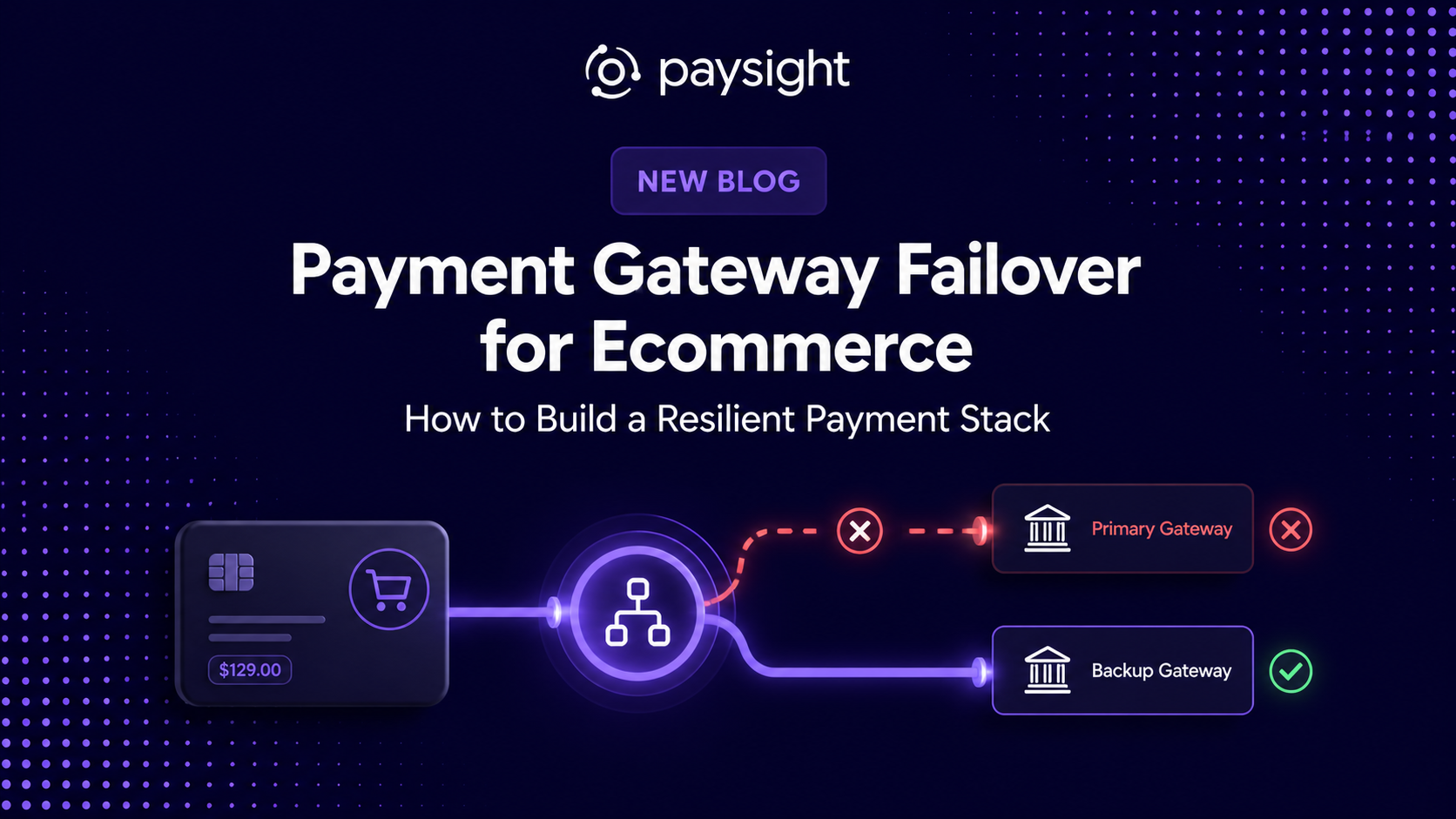
For the technical failure scenarios and end-to-end test plan, use Paysight's guide to payment gateway failover. Capacity allocation and failover are related, but they are not the same. Capacity planning decides where healthy traffic may go; failover decides what happens when a route is degraded or unavailable.
Watch the right launch metrics
Build the launch dashboard before the launch. At minimum, monitor:
- orders, payment attempts, and gross volume by MID and processor
- first-attempt and eventual approval by route and customer cohort
- peak attempts per minute, provider latency, technical errors, and timeouts
- average and maximum ticket compared with forecast
- fraud blocks, authentication outcomes, refunds, cancellations, and support contacts
- ambiguous transactions and duplicate-payment incidents
- captured, settled, reserved, and paid-out amounts
Compare costs separately after settlement. If you need a consistent measure, use the effective payment processing rate and keep reserve movements separate from processing expense.
After the campaign, turn the forecast into evidence
Within a few days, record the actual peak, volume, attempt multiplier, ticket distribution, approval pattern, technical errors, allocation changes, fraud blocks, refund requests, and payout movements. Update the route envelope only with provider confirmation and enough observed data. A campaign that happened to clear is evidence, not permission to double the next one.
The goal is not to spread every payment across as many MIDs as possible. It is to keep each eligible transaction inside a known operating envelope, preserve a correct order and payment state, and give the team enough headroom to react when demand differs from the forecast.
If you operate multiple MIDs and processors, book a Paysight demo around your current route matrix. Paysight provides the orchestration and unified reporting layer; it does not sell merchant accounts or guarantee issuer approvals.
MID capacity planning matches forecast payment demand to the confirmed operating envelope of each merchant account and route. It covers volume, peak authorization attempts, ticket size, countries, currencies, transaction types, risk exposure, settlement, and the ability to capture, refund, and reconcile payments.
Forecast orders, gross payment volume, the busiest time window, and authorization attempts per order. Add a clearly documented planning buffer, then allocate that demand only to routes that are eligible and confirmed for the relevant products, countries, currencies, ticket profile, and transaction types.
No. Another MID adds useful capacity only for transactions it is approved and technically able to process. Eligibility can differ by product, geography, currency, card type, ticket size, and transaction model. Multiple accounts also need correct routing, duplicate protection, settlement, refund, and reconciliation workflows.
Monitor orders, payment attempts, volume, approval patterns, peak velocity, latency, technical errors, timeouts, ticket size, fraud blocks, authentication, refunds, ambiguous outcomes, duplicate incidents, settlement, reserves, and payouts. Break the data down by MID, processor, country, payment method, offer, and customer cohort.


.svg)


.png)



%25201.jpeg)


Company Reg. No. 760371
VAT No. IE4280069RH


