


An ecommerce platform can advertise dozens of payment integrations and still leave every card transaction dependent on one processor. That is the first distinction operators need to understand when comparing ecommerce platforms with multiple payment processors.
Offering cards, PayPal, Apple Pay, and a local bank method gives customers more ways to pay. Multi-processor architecture goes further: it gives the business more than one viable route for comparable transactions, then controls which processor or merchant account receives each payment.
That control can improve resilience, expand market coverage, distribute risk, and create room to optimize authorization performance and cost. It can also introduce token lock-in, fragmented reporting, inconsistent fraud rules, duplicate-charge risk, and difficult reconciliation if the architecture is assembled without a shared control layer.
This guide explains what “multiple payment processors” actually means, how the main ecommerce platforms approach payments, which architecture fits different operating models, and what must be tested before a second processor becomes useful.
Key takeaways
Multiple payment methods are not the same as multiple processors: a checkout can show several logos while card payments still rely on one underlying route.
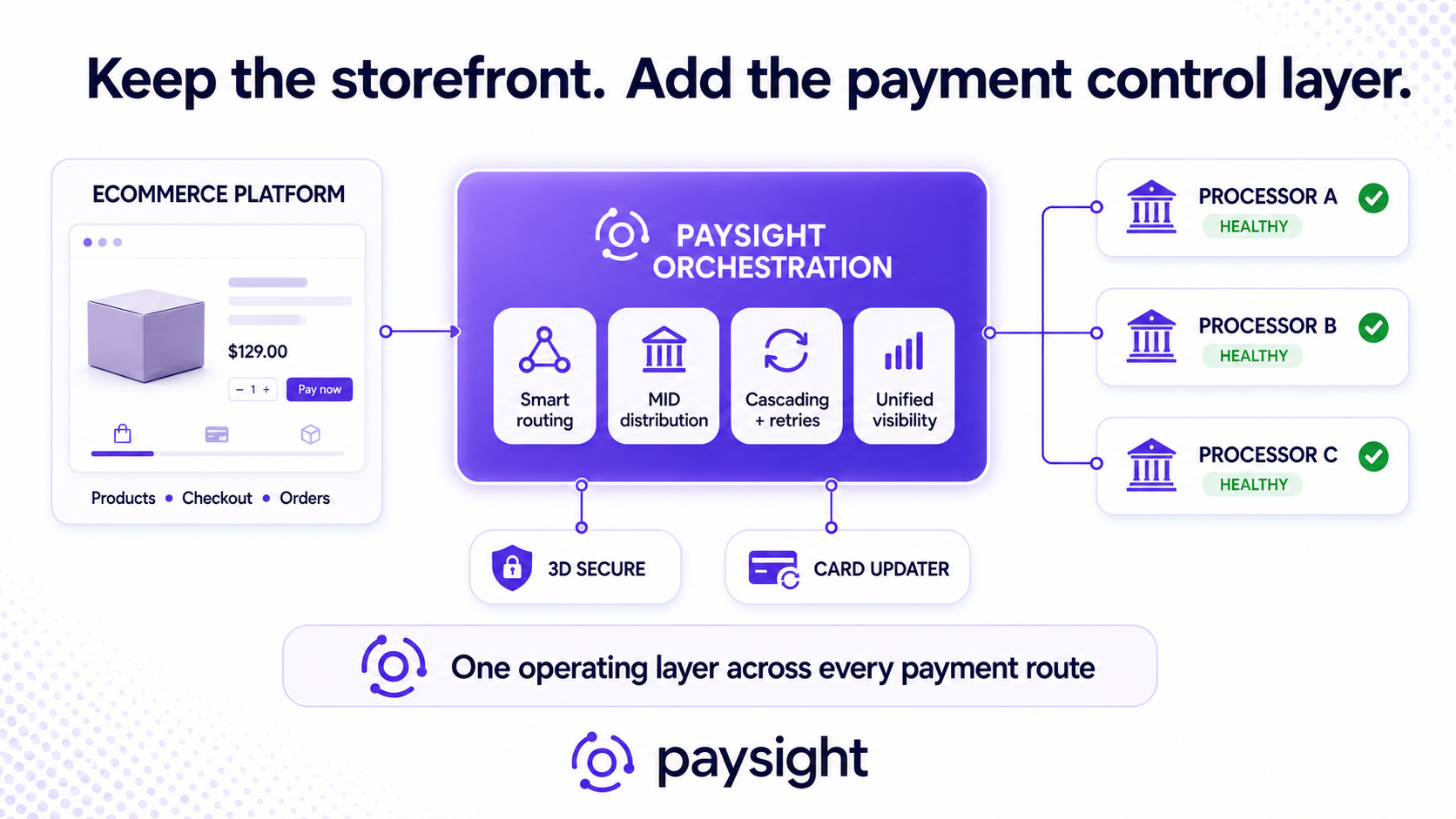
The storefront does not need to own all payment logic: Shopify, WooCommerce, Adobe Commerce, a headless checkout, or a custom storefront can sit above a separate orchestration layer.
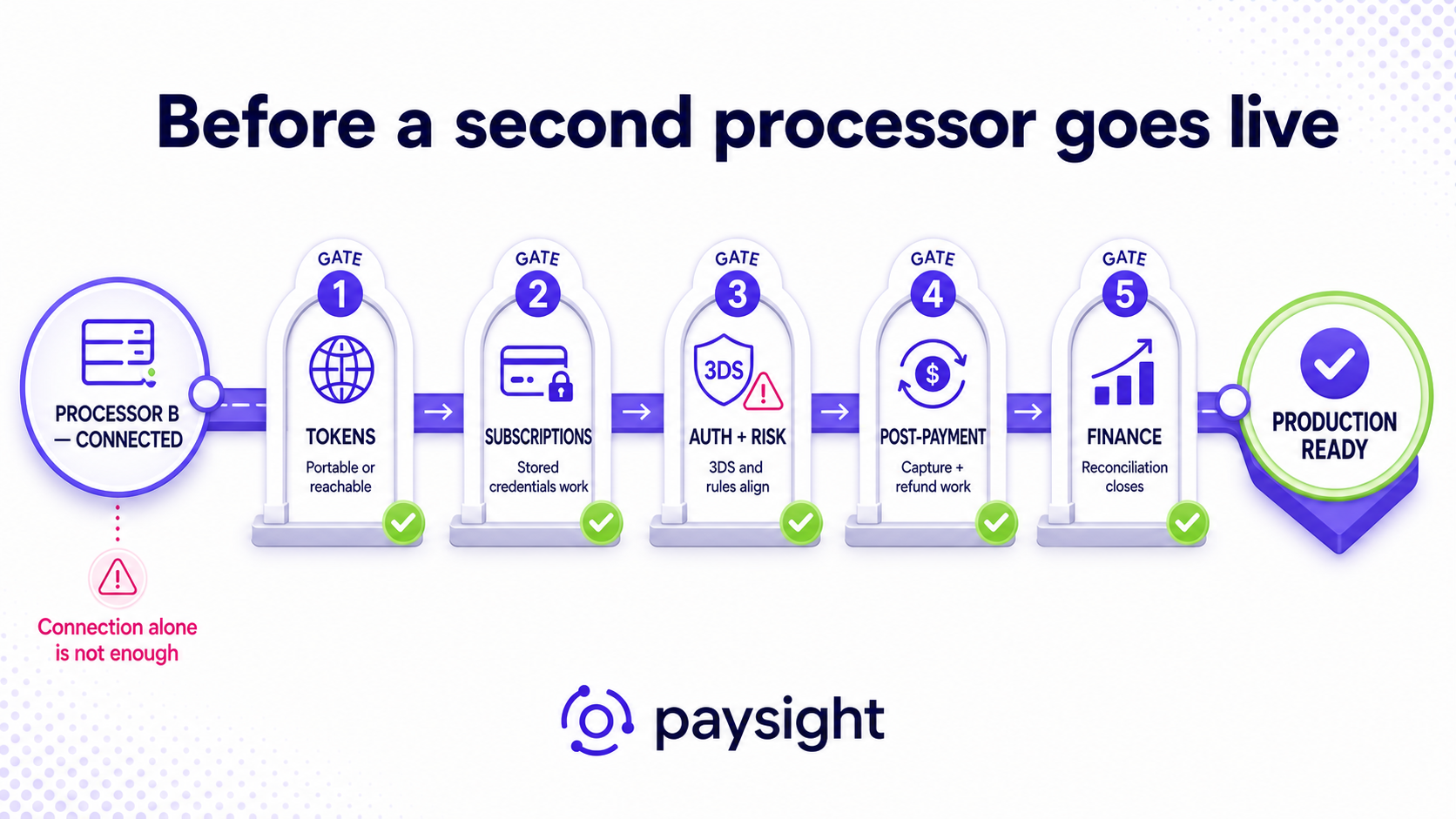
The second processor is only valuable when it is operationally ready: tokens, currencies, transaction types, authentication, refunds, subscriptions, webhooks, and reconciliation must all work across the intended routes.
Routing needs a business objective and guardrails: approval rate, continuity, regional coverage, cost, MID capacity, and risk can all influence a route, but not every decline should be sent somewhere else.
What does “multiple payment processors” mean in ecommerce?
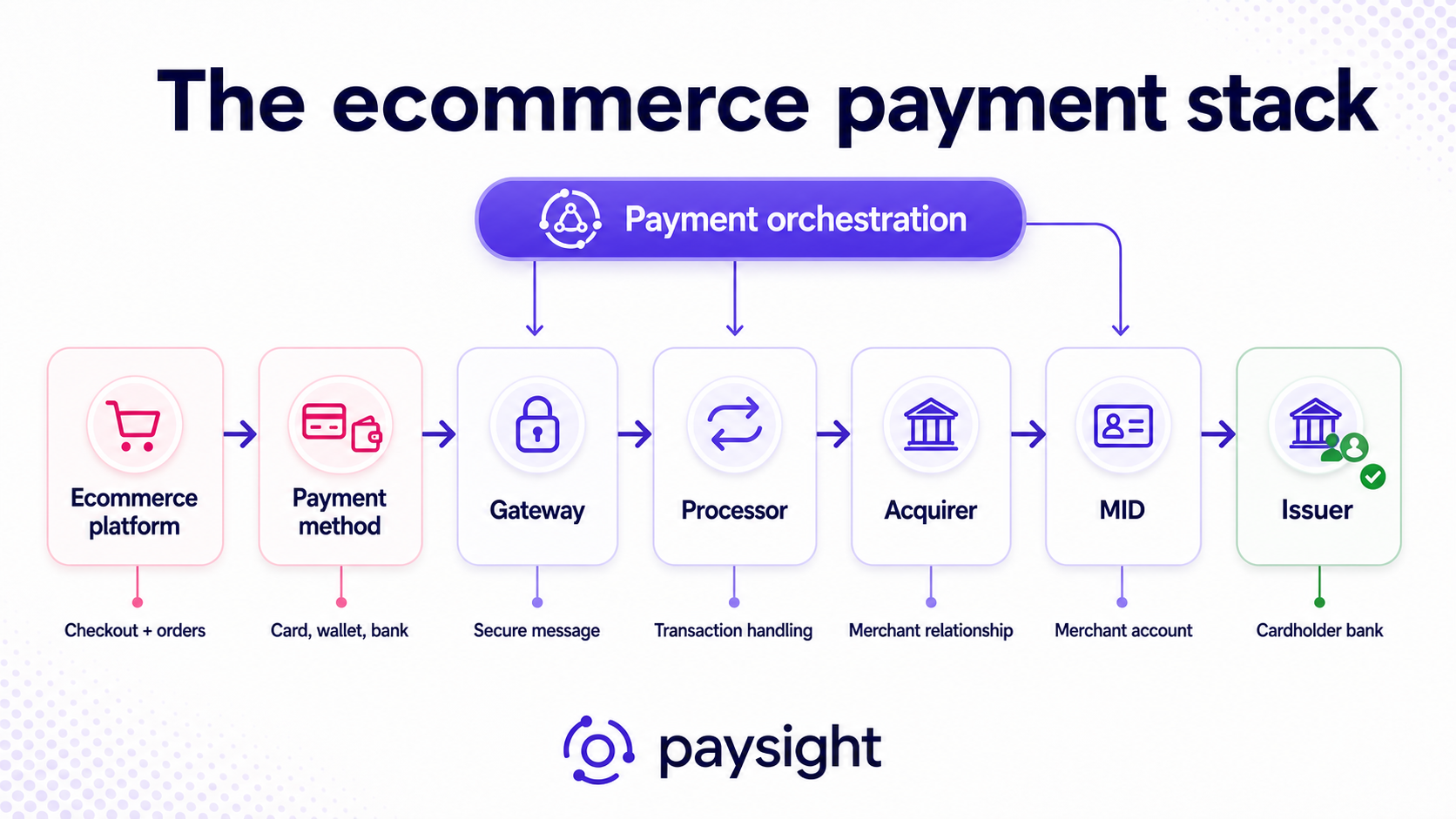
The phrase is used loosely. A payment stack contains several layers, and vendor pages often compress them into the word “gateway.”
- The ecommerce platform manages products, checkout, orders, customers, and storefront operations.
- A payment method is what the customer chooses, such as a card, wallet, bank transfer, or buy-now-pay-later option.
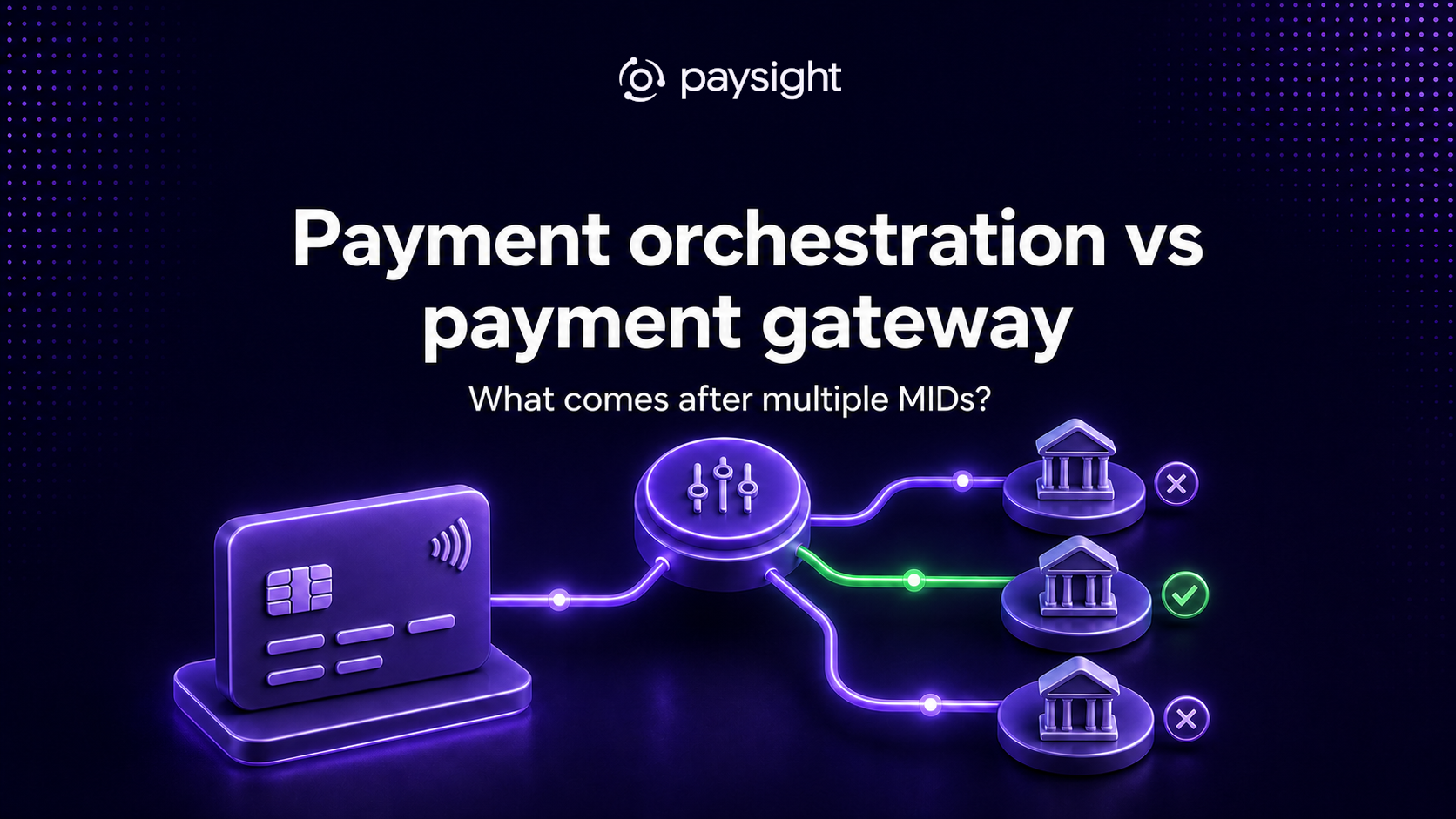
- A payment gateway securely carries payment instructions from the checkout into the payment system.
- A payment processor handles transaction messaging between the merchant, acquirer, card network, and issuer.
- An acquirer provides the merchant relationship that accepts card payments.
- A merchant account or MID identifies the merchant within an acquiring setup.
- A payment orchestration layer connects routes and decides how payment traffic should move across them.
One company may provide several of these functions. That bundling is convenient, but it can hide where the real dependencies sit.
A store has a genuine multi-processor setup when it can send eligible transactions through more than one processing relationship and operate the resulting transaction lifecycle correctly. That is different from merely placing several payment buttons on the checkout.
Why ecommerce merchants add multiple processors
Payment continuity
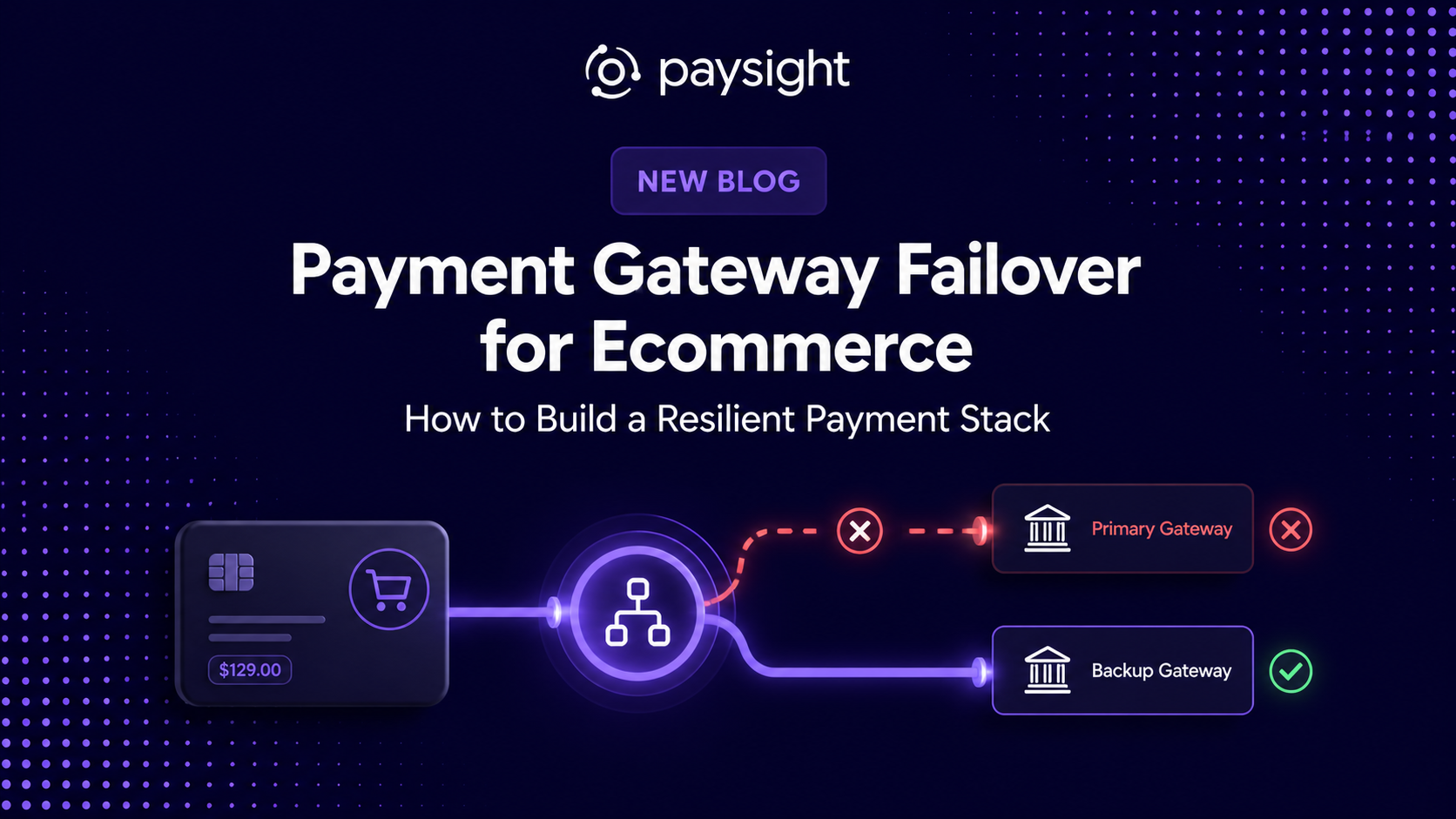
A single processor, MID, gateway connection, or regional endpoint can become a single point of failure. A compatible secondary route gives the business another path when the primary route is unavailable or degraded.
Redundancy is not automatic. The backup must be integrated, credentialed, monitored, and tested. It must also support the same transaction characteristics: market, currency, card brand, stored-credential model, authentication flow, and post-payment operations.
Better route-market fit
Processors and acquiring relationships do not perform identically across every country, card type, issuer, currency, and business model. A merchant may use one relationship for domestic traffic, another for a region where it has a local entity, and a specialist acquirer for a vertical that a mass-market aggregator does not underwrite.
The point is not to hunt for a route that ignores valid declines. It is to send each transaction to a processor that is commercially and technically appropriate before the first attempt.
MID distribution and risk control
High-volume or higher-risk merchants may operate several MIDs with different limits, geographies, entities, or product lines. Distributing traffic can prevent one account from carrying an unhealthy concentration of volume and can protect continuity when one MID is restricted.
This needs explicit rules. Random distribution can fragment data without improving stability. A routing layer should know the role, capacity, status, and acceptable traffic profile of every MID.
Commercial flexibility
Multiple relationships can reduce dependency on one provider's roadmap, contract, pricing model, or risk policy. They can also create options for testing new markets and negotiating commercial terms.
Cost should be measured end to end. A cheaper transaction rate can be offset by platform surcharges, cross-border fees, failed authorization costs, monthly minimums, engineering work, reconciliation effort, and lost volume discounts.
Payment-method and geographic coverage
Adding another provider may unlock a wallet, local bank method, currency, or country that the primary provider does not support. That is useful, but it is a coverage strategy rather than processor redundancy for existing card traffic. The architecture should label the objective clearly so the team knows what the second connection is supposed to solve.
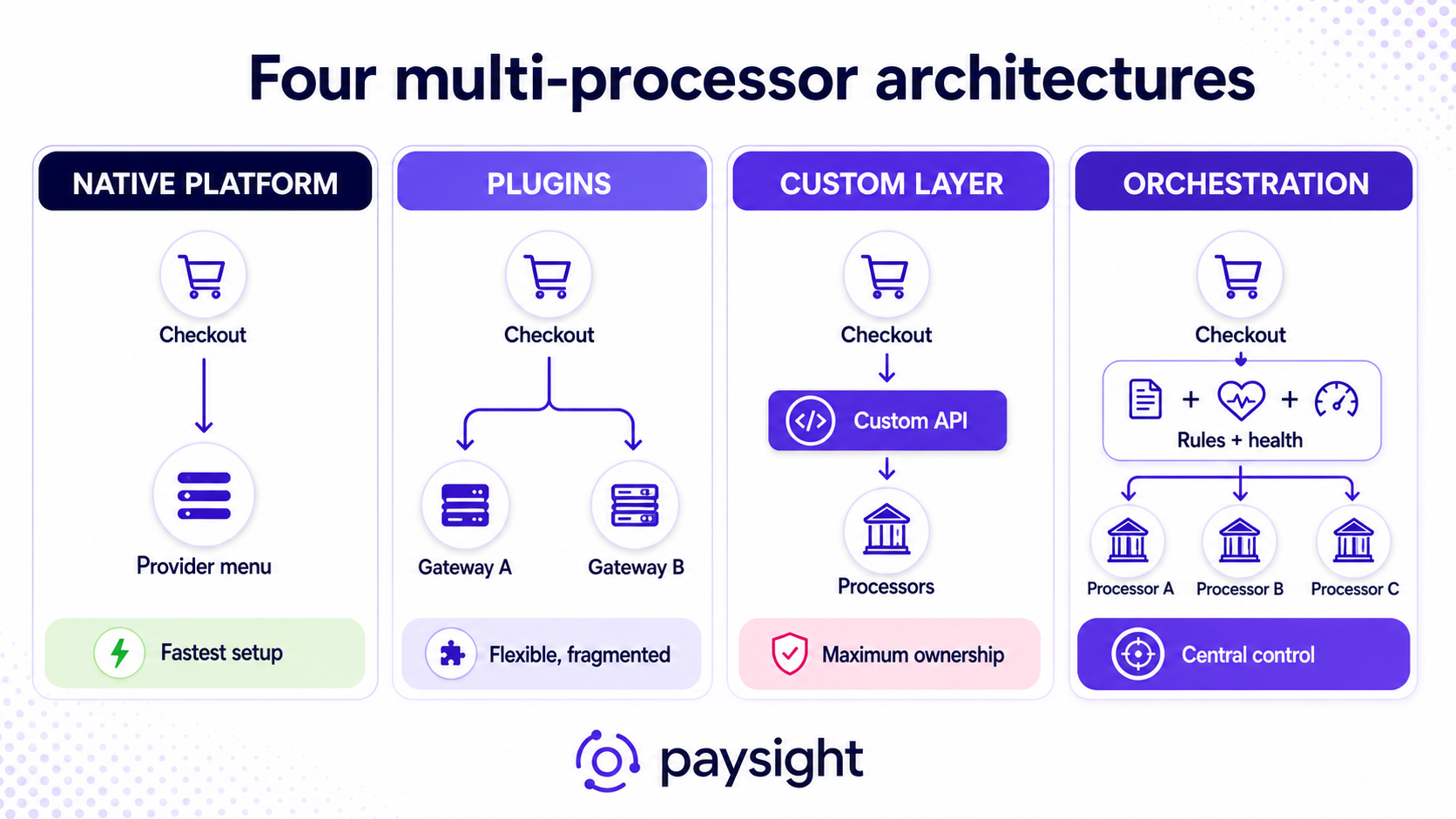
Four ways to support multiple payment processors
1. Native provider selection inside the ecommerce platform
The platform exposes a managed list of payment providers and methods. This is usually the fastest path for smaller teams because checkout, order creation, and provider configuration remain inside one admin experience.
The tradeoff is control. The platform decides which providers are available, how checkout can be customized, which transaction fields are exposed, and whether two comparable card processors can operate simultaneously. Additional platform fees may also apply.
2. Plugin or extension-based integrations
An extensible platform can load multiple payment modules. Each module connects the checkout and order system to a provider. This can expand choice without building every integration from scratch.
The risk is fragmentation. Plugins may model authorization, capture, refunds, webhooks, stored cards, subscriptions, and error codes differently. Installing two gateways does not create shared routing, failover, or unified reporting unless another layer coordinates them.
3. A custom payment layer
A merchant can build its own payment abstraction between the storefront and processors. The internal service normalizes requests, transaction states, tokens, webhooks, routing, and reporting.
This offers the most control but carries the highest engineering and operational burden. The team owns provider changes, incident response, PCI scope, testing, observability, reconciliation, and edge cases across the entire lifecycle.
4. A payment orchestration platform
An orchestration layer connects the ecommerce checkout to multiple processors, acquirers, and MIDs through one control plane. It can normalize transaction data, apply routing rules, distribute traffic, coordinate eligible retries, and centralize monitoring.
The storefront remains the storefront. The orchestration layer handles payment-path decisions beneath it. This is often the practical model for merchants that need more control than a native provider menu offers but do not want to build and maintain a complete payment operating system internally.
How major ecommerce platforms approach multiple processors
Shopify
Shopify provides a managed checkout and supports Shopify Payments, third-party providers, and additional payment methods. Its documentation says a third-party provider can be used as the sole credit-card processor or alongside Shopify Payments for access to additional methods. It also notes that third-party transaction fees can apply to payments processed through third-party or alternate gateways.
That makes Shopify strong for fast deployment and a consistent checkout, but teams should not assume that activating several methods creates processor-level routing for the same card transaction. Shopify also documents specific constraints: stores selling subscriptions generally need Shopify Payments as the primary gateway, and local-currency processing depends on the primary provider and market setup.
Before choosing an architecture, confirm the exact plan, country, checkout model, subscription requirements, provider availability, and fee treatment in Shopify's current payment documentation.
WooCommerce
WooCommerce is extension-driven. Its developer documentation describes payment gateways as plugin-based classes, including redirect, iframe, direct, and offline models. This makes it flexible: merchants can add provider extensions or build a custom gateway integration.
Flexibility is not the same as central coordination. When several gateway plugins are installed, the merchant still needs to decide how the customer sees them, how orders map across providers, where tokens live, how subscriptions renew, and whether routing or failover exists above the individual plugins. Direct integrations can also increase the security and maintenance responsibilities of the store.
Adobe Commerce
Adobe Commerce provides a payment-provider gateway architecture that can be extended with custom integrations and vault support. It suits merchants with complex requirements and dedicated engineering resources because payment behavior can be modeled deeply inside the commerce stack.
That power creates ownership. The team must maintain integration modules, normalize provider behavior, test upgrades, handle transaction state, and operate the payment layer. For some enterprises this is appropriate. For others, an external orchestration layer reduces the amount of payment-specific code living inside the commerce application.
Headless and custom commerce
A headless storefront or custom checkout offers maximum architectural freedom. The payment layer can be a dedicated service with its own APIs, tokens, rules, and observability, while the commerce platform manages catalog and order functions.
This model makes the separation between commerce and payments explicit. It can also become a large internal platform project. The build-versus-buy decision should include ongoing processor certification, scheme changes, authentication, fraud, subscriptions, refunds, disputes, finance operations, and 24/7 incident ownership—not only the first authorization call.
Which multi-processor architecture fits your business?
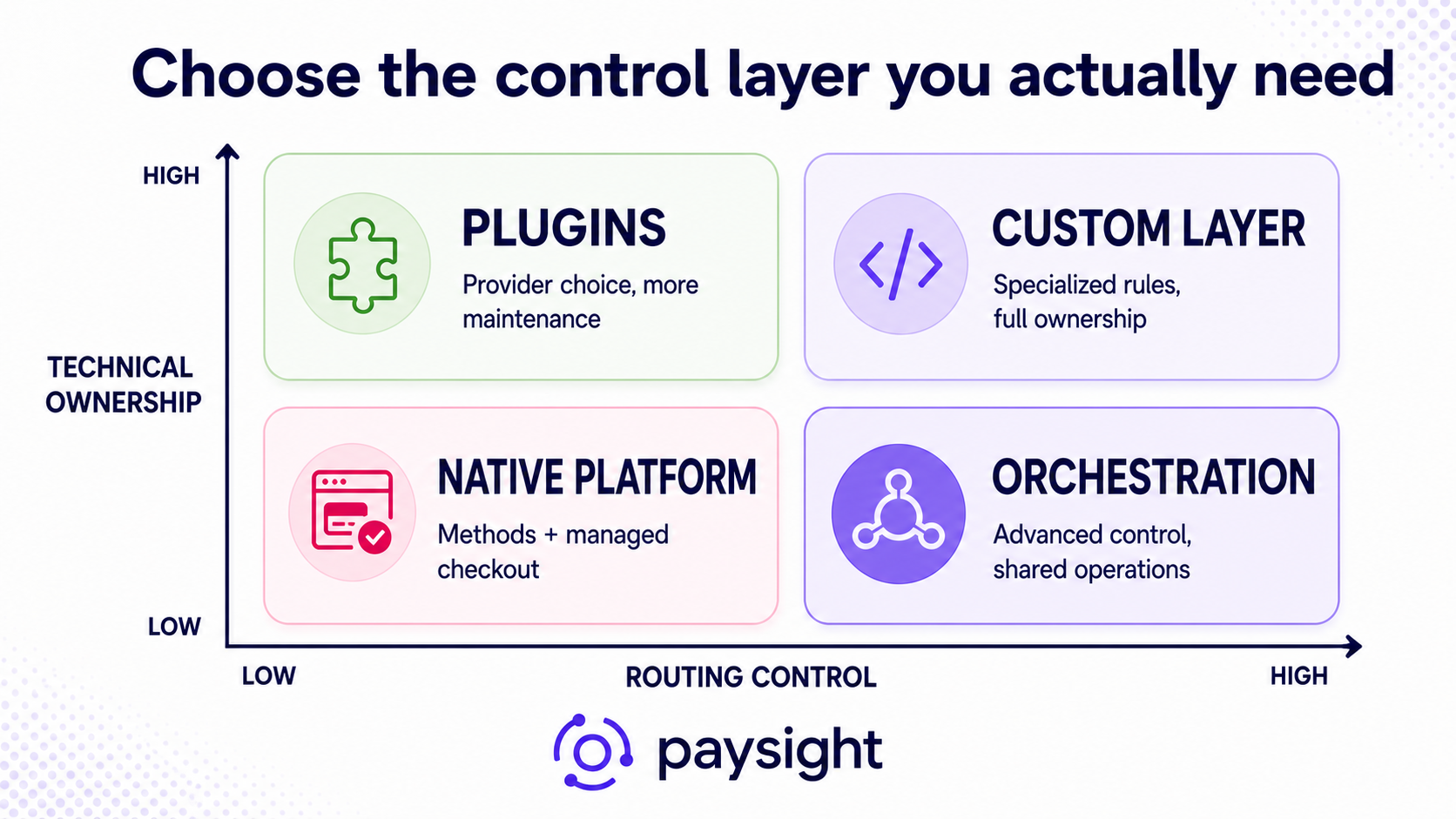
Use the simplest model that satisfies the real operating need.
Native provider support is a good fit when the objective is offering familiar payment methods, the platform's supported providers cover the target markets, transaction volume is manageable, and the team wants minimal technical ownership.
Plugin-based integrations fit merchants that need provider choice and can maintain the commerce application. They are less suitable when the business needs real-time routing, unified token control, consistent subscription recovery, or consolidated reporting across providers.
A custom payment layer fits organizations with specialized requirements and a permanent payments engineering function. The business should be prepared to own the system as critical financial infrastructure.
Payment orchestration fits merchants that need multiple processors or MIDs, conditional routing, failover, cascading, subscription recovery, and shared reporting while keeping the existing storefront.
The decision should consider:
- Current and projected transaction volume
- Countries, currencies, entities, and payment methods
- Subscription and card-on-file exposure
- Business model and underwriting requirements
- Number and type of MIDs
- Need for route-level control or failover
- Engineering and payment-operations capacity
- Token ownership and migration requirements
- Reconciliation and finance workflows
- Platform fees and provider contracts
What to look for in a multi-processor payment platform
One integration and a normalized transaction model
The platform should give the commerce system a consistent way to create, query, capture, void, and refund payments even when providers use different APIs and status names. The order system needs one canonical payment state, not a collection of loosely related provider responses.
Smart routing with explainable rules
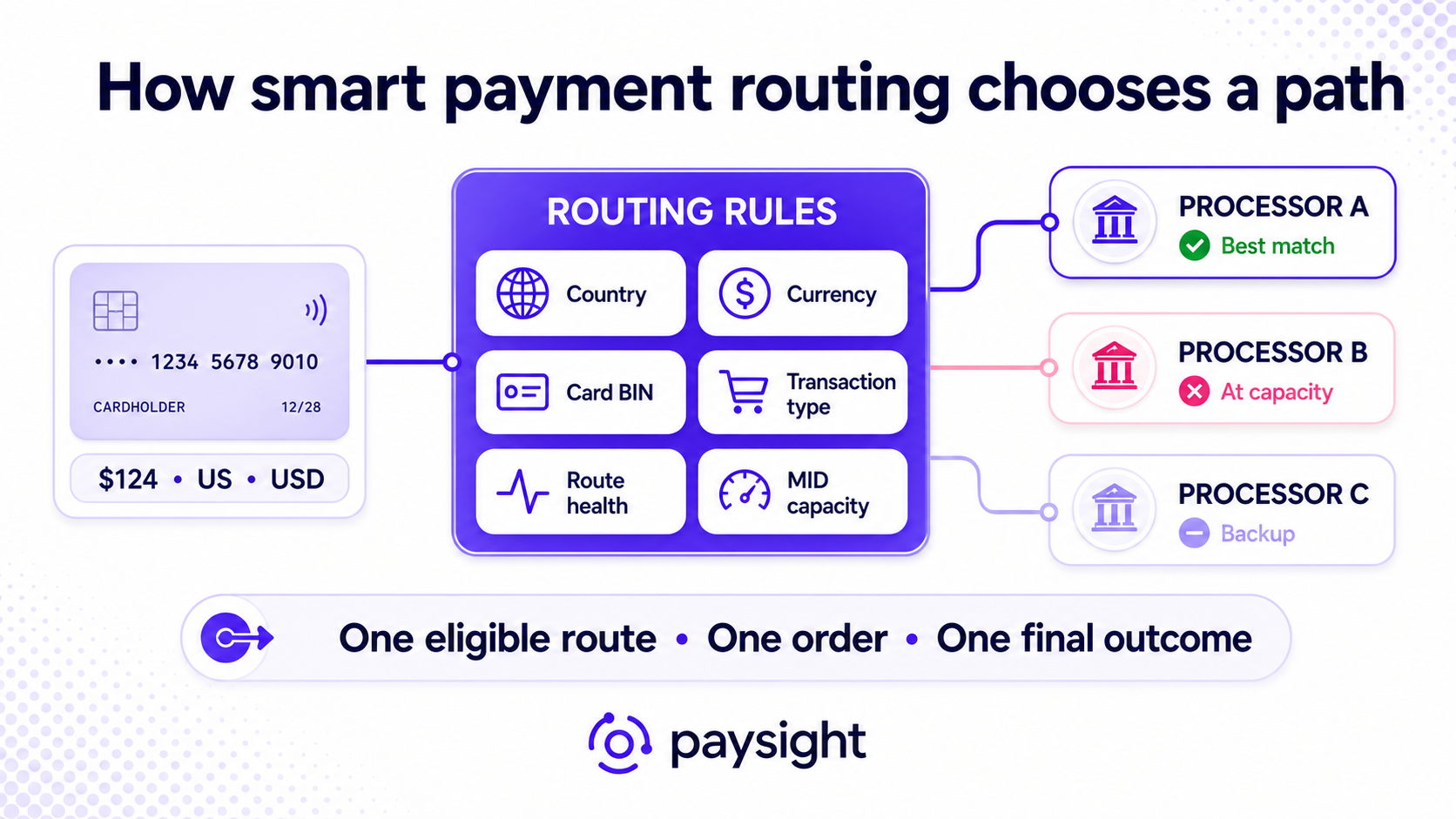
Routing conditions may include card country, BIN, currency, amount, transaction type, merchant entity, provider health, cost, risk, historical performance, or MID capacity. Stripe's orchestration documentation is a useful public example: it describes routing by card country, currency, amount, and other conditions, plus processor-level performance monitoring.
Every route decision should be observable. Operators need to know which rule fired, which route was selected, whether a fallback occurred, and what the final order outcome was.
Safe failover and retry controls
Technical failures, timeouts, issuer declines, authentication failures, fraud blocks, and invalid requests require different actions. A system should not retry every failed transaction through every processor.
Stripe's cross-processor retry documentation notes that processor capabilities and 3D Secure outcomes affect whether a payment is eligible for another attempt. Timeouts also need special care because the first processor may have completed the authorization even though its response never returned.
Use one order identity, idempotency keys, transaction-status checks, webhooks, and an attempt ledger. Adyen's idempotency guidance explains how a timed-out request can be safely repeated with the same key without performing the action twice.
Token portability and vault strategy
Ask where card credentials are stored, who controls the vault, whether tokens are provider-specific, how tokens can be exported, and whether network tokens are available across routes. A second processor cannot recover a subscription payment if it cannot use the stored credential.
The PCI Security Standards Council explains that tokenization replaces the primary account number with a surrogate value and may reduce the amount of cardholder data inside merchant systems, but it does not eliminate PCI obligations. Token design is therefore both a portability decision and a security decision.
Consistent authentication and risk controls
3D Secure, AVS, CVV, device signals, fraud rules, allowlists, blocklists, and manual-review outcomes should remain coherent across processors. A backup route should not become a way around the risk policy applied to the first attempt.
Check whether authentication evidence can be used on another route, whether the selected acquirer BIN is correct, and how liability and exemptions are recorded. If the backup does not support a required feature, the router should identify that before sending the transaction.
Full lifecycle support
Authorization is only the first step. Confirm support for:
- Automatic and manual capture
- Partial capture and multiple capture
- Full and partial refund
- Authorization reversal and void
- Stored credentials and merchant-initiated transactions
- Subscription renewal and dunning
- Chargebacks and dispute evidence
- Webhooks and asynchronous states
- Payouts, fees, settlement, and reconciliation
A routed payment should retain affinity to the processor that owns the financial transaction. Refunds, disputes, and settlement activity may still need to be administered through that processor even when reporting is centralized.
Unified reporting without hiding provider truth
A shared dashboard should normalize transaction outcomes while preserving provider references, MID, route, response code, fee, currency, authentication result, and settlement state. Operators need a common view; finance still needs enough detail to reconcile each processor and bank payout.
How smart payment routing works
A routing policy chooses the best eligible route before the authorization request.
First, filter by hard compatibility: merchant entity, currency, country, payment method, card type, transaction model, authentication, and processor availability. A route that cannot legally or technically process the transaction should never enter the candidate set.
Second, apply business priorities. One merchant may prioritize approval performance. Another may balance volume across MIDs. A third may prefer a local acquirer or control cost when several routes are equally suitable.
Third, enforce guardrails. Limit retry count, prevent loops, respect network and issuer guidance, preserve risk decisions, and stop traffic when a processor or MID reaches a threshold.
Finally, record the route and outcome. Routing is only useful when the team can compare final order conversion, not merely the number of processor attempts.
Special considerations for subscriptions
Recurring payments expose weaknesses that a live checkout can hide. The customer is not present to re-enter a card or complete an unexpected authentication step.
For every processor route, verify:
- Stored-credential and merchant-initiated transaction support
- Initial customer consent and credential indicators
- Token portability or vault reachability
- Network token and card-account updater behavior
- Retry timing and decline classification
- Subscription state after rerouting
- Plan changes, prorations, pauses, and cancellations
- Customer communications and entitlement changes
An account updater result stored in one provider's vault may not follow the customer to another processor. A subscription platform may also tie billing objects to one gateway. Test the actual renewal flow rather than assuming a successful one-time card payment proves recurring compatibility.
Multi-processor implementation checklist
Define the objective
Write down why the second route exists. Is it continuity, market coverage, MID distribution, subscription recovery, cost, or processor-risk diversification? A route without an objective becomes administrative clutter.
Map dependencies
Document the gateway, processor, acquirer, bank sponsor, MID, region, token vault, fraud service, 3DS provider, and network connections behind each route. Two provider names can still share the same dependency.
Build a capability matrix
For each route, record supported markets, currencies, card brands, payment methods, transaction types, authentication, tokens, captures, refunds, subscriptions, and dispute workflows.
Normalize payment state
Create one canonical order and payment model. Map provider-specific statuses into consistent states and store every attempt under the same commercial transaction.
Test failure and recovery
Simulate network failures, timeouts, provider errors, hard declines, soft declines, failed authentication, fraud blocks, unavailable tokens, and route recovery. Verify that each one produces the intended action without duplicate charges.
Reconcile end to end
Match orders to authorizations, captures, refunds, disputes, fees, settlements, and bank payouts. Test normal operation and incident scenarios separately.
Establish ownership
Define who can change routing rules, who responds to alerts, who contacts processors, who approves emergency traffic moves, and who signs off after reconciliation.
Metrics for a multi-processor payment stack
Measure performance at the order, route, and financial-settlement levels.
- Unique-order authorization rate
- End-to-end checkout completion
- Approval rate by processor, MID, region, BIN, and transaction type
- Technical-error and timeout rate
- Route selection and failover volume
- Recovery rate after an eligible reroute
- Duplicate authorization or charge incidents
- 3D Secure completion and fraud-block rate
- Cost per successful transaction
- Subscription renewal and recovery rate
- Refund, capture, and settlement mismatches
- Time to detect and recover from a processor incident
Attempt-level approval rate can mislead when one order generates several attempts. The final question is whether one customer action produced one correct order, one correct charge, and one reconcilable settlement.
Common mistakes when adding another processor
- Confusing payment-method choice with card-processor redundancy
- Selecting providers before defining the route's objective
- Optimizing for advertised fees without modeling platform and operational cost
- Discovering after integration that stored tokens cannot move
- Applying different fraud or 3DS policies across routes
- Retrying hard declines or ambiguous timeouts without safeguards
- Keeping captures, refunds, and disputes outside the transaction model
- Sending production traffic to an untested backup
- Fragmenting reporting across provider dashboards
- Adding more routes than the team can monitor and reconcile
The best multi-processor setup is not the one with the most logos. It is the smallest set of independent, compatible routes that the business can operate confidently.
How Paysight supports ecommerce platforms with multiple processors
Paysight sits beneath the storefront as a payment orchestration and operations layer. Ecommerce teams can keep their existing checkout while connecting multiple processors, acquirers, and MIDs through one system.
The platform supports rule-based routing, MID grouping and traffic distribution, cascading for eligible one-time and subscription payments, recurring retry strategies, tokenization and network-token connections, card account updater services, 3DS, and unified transaction visibility.
That separation matters. The commerce platform can continue managing products, checkout, customers, and orders. Paysight controls how eligible payments move across the processing infrastructure and gives operators one place to investigate outcomes and adjust payment logic.
Explore Paysight's payment orchestration platform or talk to the team about the processors, MIDs, markets, and subscription flows your current ecommerce stack needs to support.
Yes. An ecommerce store can connect multiple payment providers directly, through plugins or custom integrations, or through a payment orchestration layer. The important distinction is whether the setup merely offers different payment methods or can actually route comparable card transactions across processors.
There is no universal best platform. Shopify offers managed checkout and third-party providers subject to platform rules and fees; WooCommerce and Adobe Commerce provide more integration flexibility but require more technical ownership. Merchants that need dynamic routing across processors and MIDs often add an orchestration layer rather than replacing the storefront.
A gateway securely carries payment instructions from the checkout into the payment system. A processor handles transaction messaging between the merchant, acquirer, card network, and issuer. Providers often bundle these roles, which is why the terms are frequently used interchangeably in product marketing.
Not necessarily. Adding PayPal or a wallet gives customers another way to pay, but it does not automatically create a backup route for the same card transaction. Processor redundancy requires compatible routes, portable credentials or tokens, routing rules, transaction-state controls, and tested operational workflows.
Yes, when the payment layer and processors support the required stored-credential and merchant-initiated transaction flows. The merchant must also confirm token portability, account updater behavior, retry rules, authentication requirements, and how subscription state stays synchronized after a route changes.
No. Technical failures and some recoverable declines may qualify for controlled rerouting, but hard declines, failed authentication, invalid payment details, and fraud blocks normally require a different response. Timeouts must be resolved carefully because the original transaction may already have succeeded.
Paysight provides a payment orchestration layer for ecommerce merchants using multiple processors and MIDs. Teams can define routing and traffic-distribution rules, manage cascading and retries, connect supporting payment services, and monitor transaction outcomes from one operating layer.


.svg)

.png)




Company Reg. No. 760371
VAT No. IE4280069RH


