


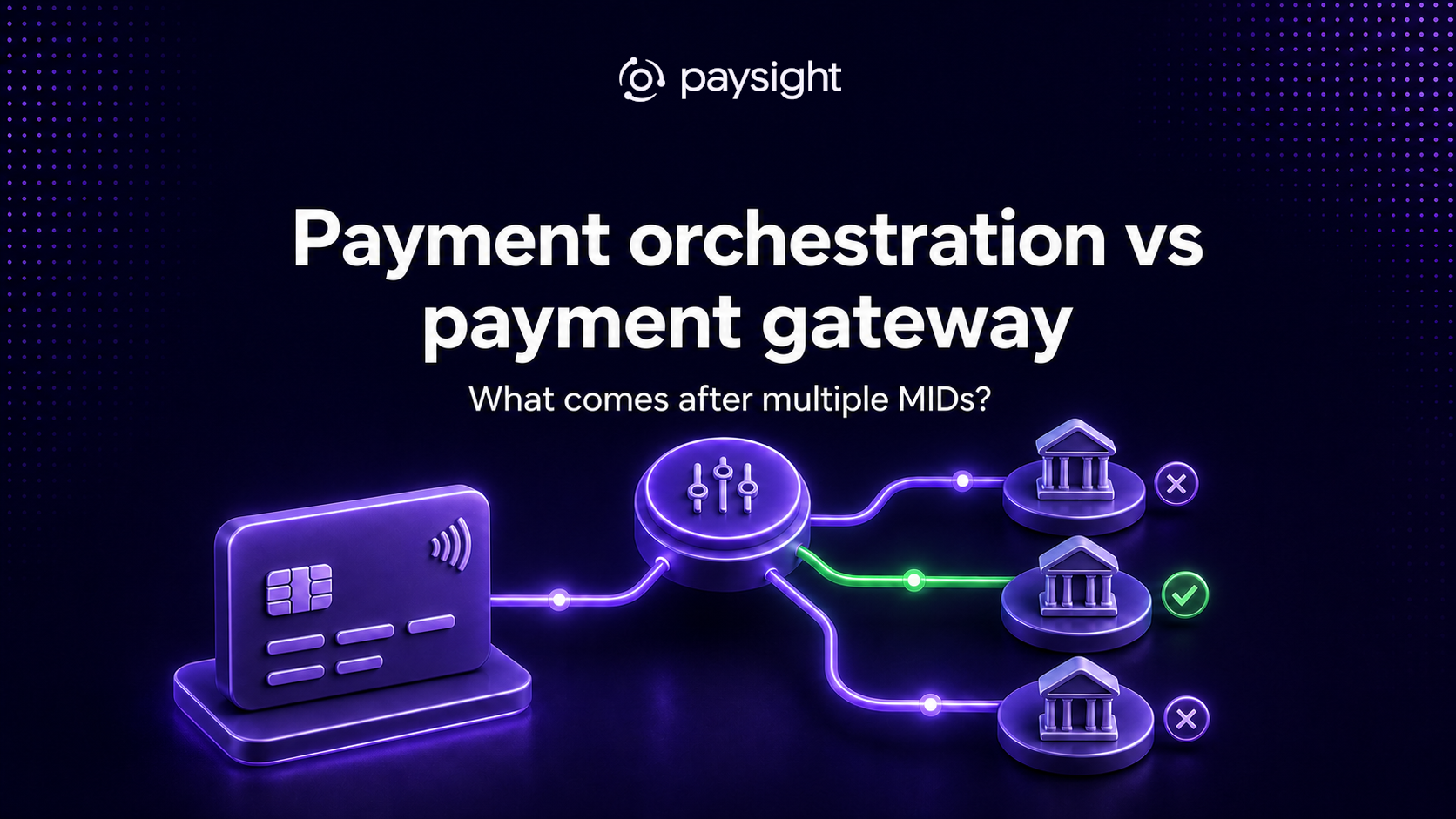
Most ecommerce operators do not wake up excited to redesign their payment architecture. They are thinking about traffic, PDP conversion, creative testing, inventory, fulfillment, and whether Meta decided to ruin their week.
Payments become interesting only when they start getting in the way.
Maybe Shopify Payments or Stripe worked perfectly until the business entered a higher-risk category. Maybe one merchant account became three. Maybe several MIDs now sit behind NMI, but approvals still vary, reporting is fragmented, or one provider decision can interrupt revenue. At that point, the question is no longer simply which gateway should we use? It becomes: who should control all these payment routes?
That is the practical difference between a payment gateway and payment orchestration. A gateway connects the checkout to payment processing. Orchestration coordinates multiple gateways, processors, acquirers, MIDs, and supporting services so the business can decide where a payment should go and what should happen next.
This guide explains the difference without requiring a payments dictionary, shows where a multi-MID gateway fits, and helps ecommerce teams decide when orchestration is a useful next step rather than an expensive new dashboard.
Key takeaways
- A payment gateway moves a payment request between the checkout and the processing stack. Some gateways also support multiple MIDs, processor connections, basic routing, tokenization, and fraud tools.
- Payment orchestration does not replace gateways or processors. It provides a control layer across multiple routes and services.
- Multiple MIDs behind one gateway diversify merchant accounts, but they may still share the same gateway integration, token vault, routing limitations, and operational dependency.
- Routing chooses the best eligible first route. Cascading decides whether a different eligible route should receive the payment after a confirmed failure.
- More routes do not automatically produce better approvals. Eligibility rules, token portability, decline classification, duplicate protection, and measurement determine whether the setup actually works.
- A single gateway is often enough for a young, uncomplicated store. Orchestration becomes more valuable when processor dependency, MID capacity, approval performance, international growth, subscriptions, or reconciliation become material constraints.
Payment gateway vs payment orchestration in one sentence
A payment gateway transports and manages transactions through one gateway environment. Payment orchestration manages decisions across multiple payment environments.
The easiest mental model is traffic infrastructure:
- The checkout is where the driver begins the journey.
- A MID is one commercial lane through which the merchant is identified and funded.
- A processor or acquirer carries the transaction toward the card network and issuer.
- A gateway is an on-ramp connecting the checkout to that processing route.
- Payment orchestration is the traffic-control layer deciding which eligible on-ramp and lane should be used, monitoring what happened, and coordinating the next action.
Like every analogy, this one eventually breaks. Some gateways offer sophisticated routing, and some full-stack providers combine gateway, processing, acquiring, fraud, tokens, and reporting. The useful question is not what label appears on the vendor's homepage. It is which decisions your system can make across genuinely independent payment routes.
Start where ecommerce merchants actually start
For many DTC stores, the first payment stack is deliberately boring. Shopify Payments or a full-stack provider such as Stripe handles the important work behind one integration. The merchant gets a checkout, card acceptance, payouts, refunds, disputes, and a dashboard without assembling each component separately.
That is a good setup when it fits the business. Simple is valuable.
The limitations usually become visible after growth or a change in risk profile:
- The business enters a category the original provider does not want to support.
- One account closure or reserve decision can interrupt most revenue.
- Approval rates vary across issuers, regions, products, or transaction types.
- The team needs multiple legal entities, merchant accounts, currencies, or acquiring relationships.
- Subscription recovery and stored credentials become important.
- Finance has to reconcile several provider dashboards manually.
The first response is often to add merchant accounts. That can distribute volume, separate brands or entities, and reduce dependency on one MID. It is meaningful progress—but it does not always diversify the complete payment path.
What is a payment gateway?
A payment gateway is the technology connecting the merchant's checkout or billing system with the payment processor or acquiring setup. It securely carries payment information and returns the resulting status to the merchant's system.
Modern gateways frequently do much more than simple message transport. Depending on the provider, they may include:
- Hosted payment fields or checkout pages
- Tokenization and stored-payment credentials
- Fraud screening and 3D Secure connections
- Recurring billing tools
- Multiple processor connections
- Multi-MID management
- Transaction routing rules
- Reporting, refunds, and dispute workflows
NMI is a useful example for ecommerce operators because it supports multiple MIDs and processor configurations through one gateway. Its documentation describes transaction routing across multiple processors and an advanced interface that can route using merchant-defined fields. That is more capable than a basic single-route gateway.
But the gateway remains the central environment. Integrations, tokens, routing configuration, and transaction visibility may still depend on that gateway's supported processors, features, and operating model.
In plain English: adding more doors inside one building is useful. You are still inside one building.
What is payment orchestration?
Payment orchestration is a software control layer that connects and coordinates gateways, processors, acquirers, MIDs, payment methods, fraud tools, authentication services, token services, chargeback systems, and reporting workflows.
Instead of hard-coding every provider into the checkout, the merchant integrates with the orchestration layer. The orchestrator then applies rules and returns a normalized result regardless of which eligible route processed the transaction.
That control layer can support:
- Routing by geography, currency, issuer, card type, product, entity, risk profile, cost, capacity, or performance
- Traffic distribution across MIDs and processors
- Cascading or rerouting after eligible failures
- Health-based gateway failover
- Processor-independent payment-method and token strategy
- Shared 3D Secure, fraud, account-updater, and chargeback workflows
- Normalized transaction data and reporting
- Centralized attempt history, refunds, and reconciliation
Payment orchestration is therefore not another processor. If Processor A receives the payment, Processor A still processes it under the merchant's agreement with that provider. The orchestrator controls how the route is selected and how the surrounding workflow is coordinated.
Stripe's orchestration documentation makes the same distinction: its orchestration product routes payments to multiple processors, while the selected third-party processor remains responsible for processing activity routed to it.
The common middle step: multiple MIDs behind one gateway
Many ecommerce operators reach a setup that looks diversified on paper:
- Several MIDs
- Different merchant accounts or entities
- One NMI or similar gateway account
- Rules that split volume between processing services
This is not fake diversification. It can distribute volume, protect individual MID capacity, separate product lines, and route traffic according to gateway-supported fields.
It is also not the same as full orchestration.
The setup may still have one gateway API, one gateway outage domain, one token vault, one response format, one reporting layer, and one list of supported processor features. If the gateway relationship, credential store, or integration fails, every MID behind it can be affected together.
The next step is not necessarily ten more providers. It is moving the decision layer above any single gateway so the merchant can coordinate multiple gateways and processors while keeping one payment state.
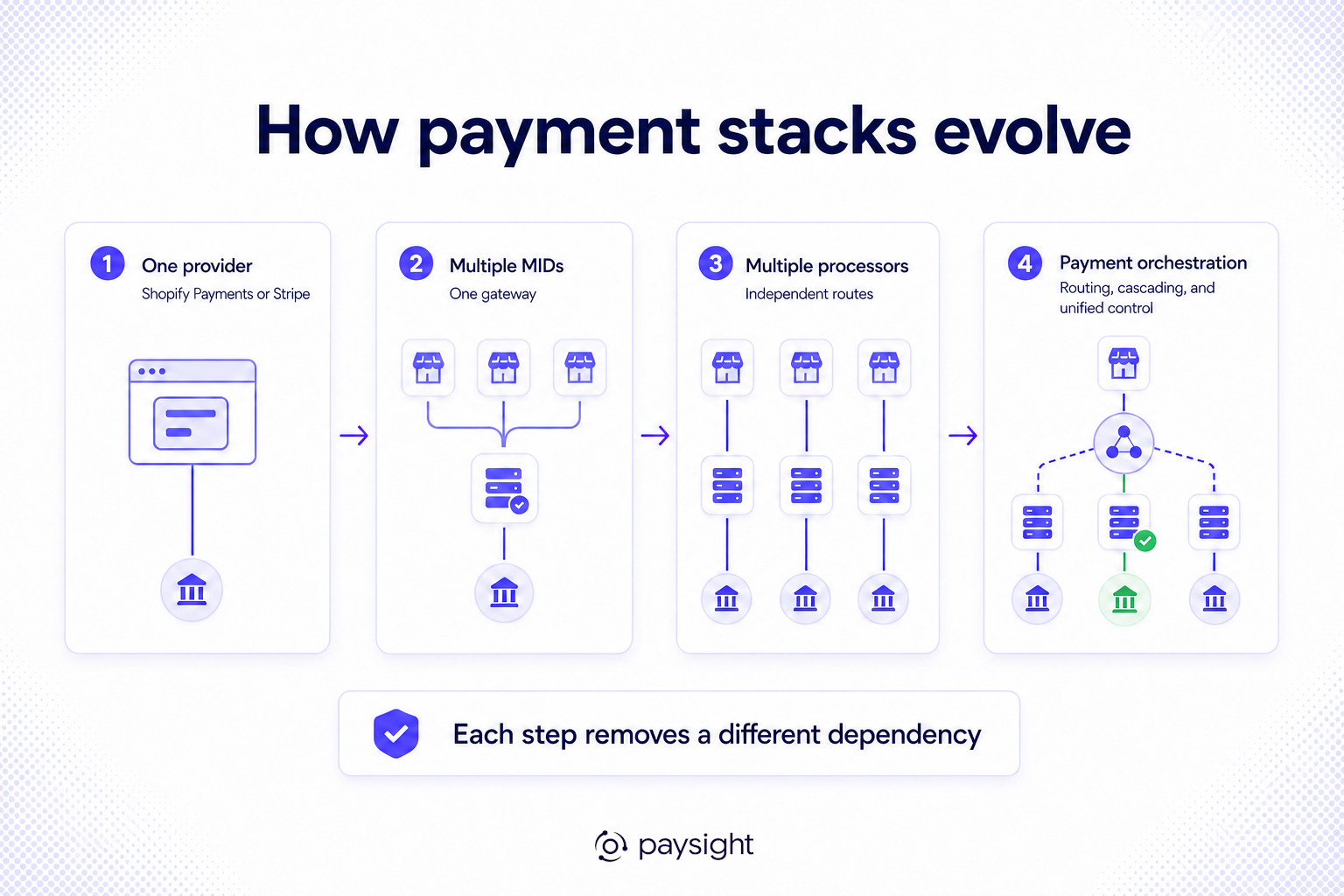
That progression usually looks like this:
- One bundled provider: fast to launch and easy to operate.
- Multiple MIDs: commercial risk and volume are distributed.
- Multiple processors or gateways: technical and acquiring routes become more independent.
- Orchestration: routing, recovery, credentials, and reporting are controlled across those routes.
Not every merchant needs to reach step four. The point is to understand which dependency each step actually removes.
Routing and cascading, explained without the jargon
Routing answers: where should this payment start?
Cascading answers: if the first attempt definitively failed, is there a valid next route?
That distinction matters because sending a payment to another processor is not always safe or useful. A gateway timeout may mean the first processor is still completing the transaction. An issuer hard decline may be repeated by every processor. Failed authentication may require the customer, not another MID.
A sensible orchestration policy performs three checks:
- Is the route eligible? It must support the merchant, transaction type, currency, card, credential, authentication state, and relevant contractual rules.
- Is the route a good choice? Among eligible routes, compare relevant performance, cost, capacity, prior success, and current health.
- Is another attempt allowed? After a failure, confirm the first result is final and classify whether the next action should be rerouting, retrying later, updating credentials, or asking the customer to act.
This is why cascading should not mean fire the same card at every processor until something approves. That approach can create duplicate charges, repeated pending authorizations, network retry problems, fraud signals, and unhappy customers.
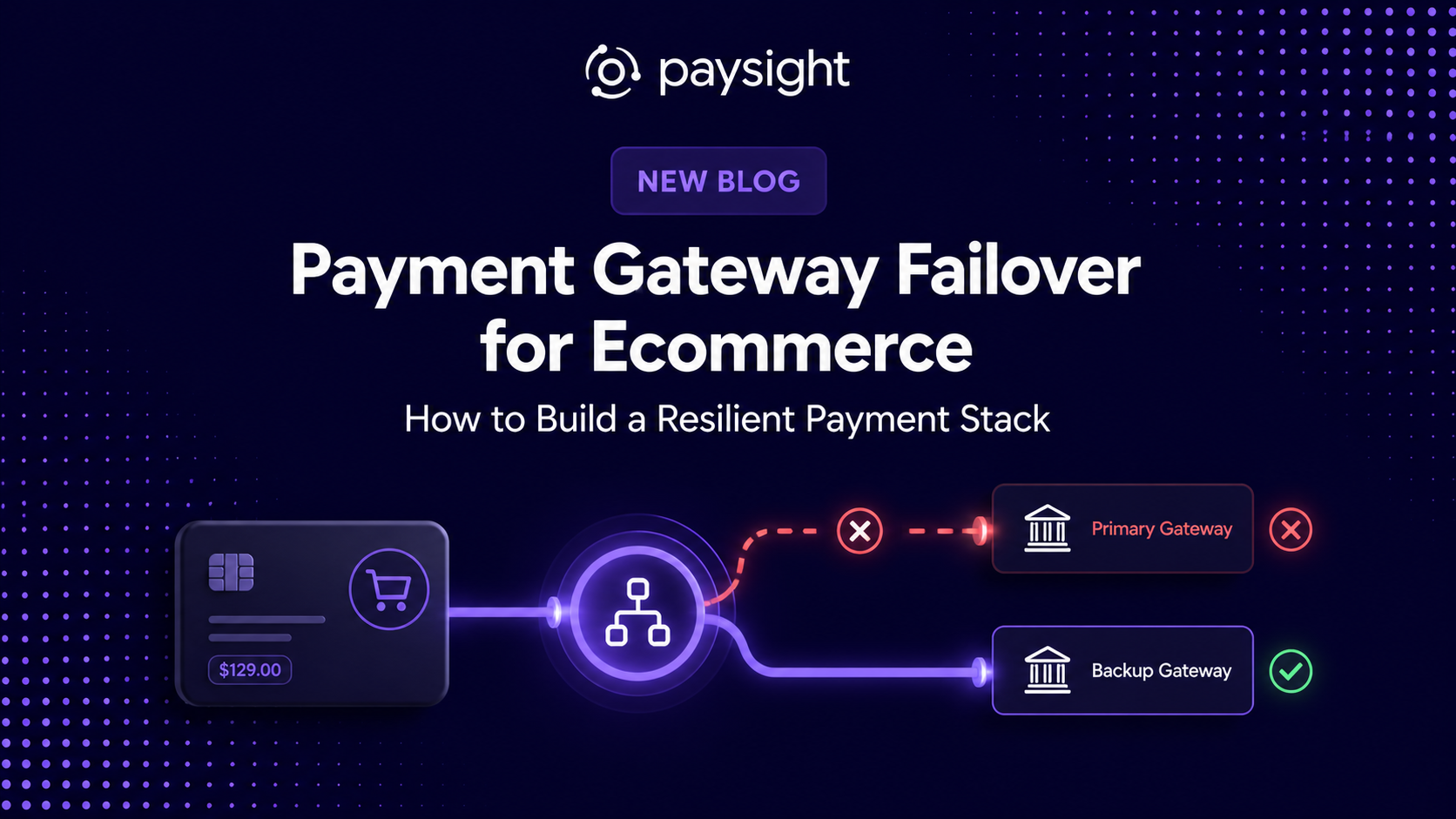
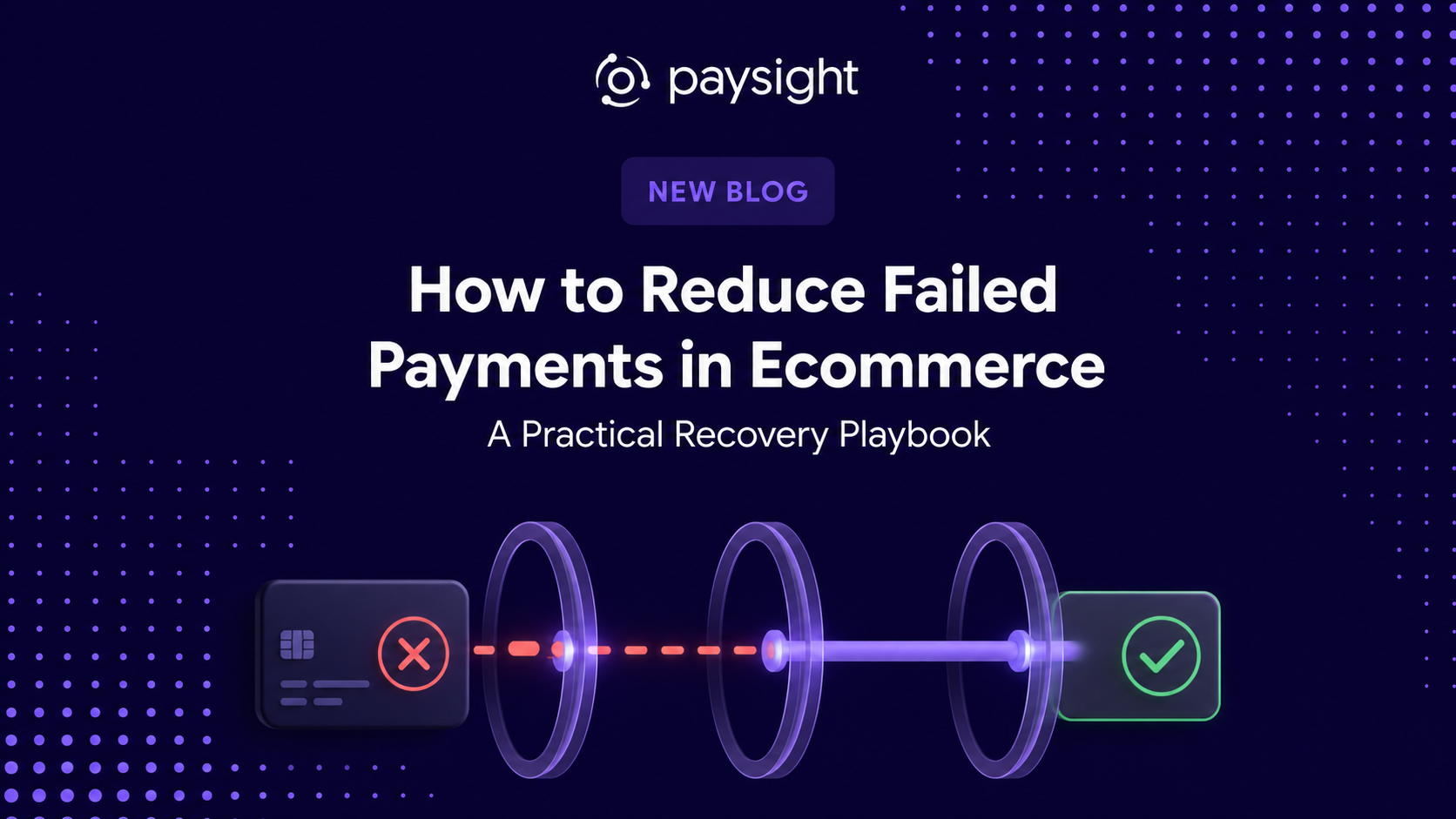
Our guides to payment gateway failover and reducing failed ecommerce payments cover the failure-classification side in more detail.
What orchestration adds beyond more payment connections
The connectors are only the beginning. Useful orchestration also owns the logic and shared state around them.
One payment identity
Every checkout order or subscription invoice should have one canonical payment state above the providers. Individual authorizations become attempts under that payment—not separate orders that can accidentally succeed twice.
Credential portability
A token created by one gateway may not work with another. The architecture needs a vault, gateway-specific token mapping, network-token strategy, or compliant migration process that makes the intended routes usable.
Normalized outcomes
Providers return different codes and webhook events. Orchestration maps those results into operational categories such as approved, definitively failed, temporarily declined, customer action required, or status unknown—without discarding the raw response.
Shared recovery rules
The system coordinates safe retries, cascading, card updating, dunning, and customer prompts rather than letting each provider run an unrelated recovery sequence.
Unified reporting and reconciliation
Operators can compare performance and trace a transaction across the complete attempt history. Finance can connect authorizations, captures, refunds, fees, settlements, payouts, and disputes back to one commercial order.
Supporting payment services
Orchestration can connect services surrounding authorization: 3D Secure, fraud screening, chargeback alerts, account updating, payment-method management, subscription recovery, and analytics.
The result is not “more gateways.” It is a payment operating system for the gateways and processors you already chose.
When a single gateway is still enough
Payment orchestration adds control, but it also adds decisions, integrations, testing, contracts, and operational responsibility. A merchant probably does not need it yet when:
- Most volume runs through one stable provider that supports the business model.
- One market, currency, entity, and uncomplicated payment flow cover the business.
- Approval performance is healthy and the team has no evidence that route choice is the constraint.
- Processor downtime or account dependency is not yet a material commercial risk.
- The team cannot operate or measure additional payment routes.
Adding architecture before there is a real constraint can turn a simple checkout into a science project. There is no trophy for having the most payment integrations.
Signs you are ready for orchestration
Orchestration becomes easier to justify when multiple problems appear together.
The strongest signal is not transaction volume by itself. It is the combination of meaningful payment risk and the ability to act on it.
For example, a merchant with several MIDs but one gateway may be ready when it needs a second gateway or processor family, route-level approval optimization, shared subscription recovery, or protection against one integration becoming a revenue-wide point of failure.
A merchant with only one provider may be ready sooner if the business is high risk, operates across multiple regions, experiences material issuer-specific declines, or cannot tolerate an outage. Another merchant processing much more volume may remain fine on one full-stack provider because its payment requirements are predictable and performance is healthy.
A practical migration path from gateway to orchestration
Do not replace the payment stack in one heroic launch. Build the control layer around the working route and expand deliberately.
- Map the current stack. Document checkout, gateway, processors, acquirers, MIDs, tokens, fraud tools, subscriptions, refunds, webhooks, and reconciliation.
- Identify the actual constraint. Account risk, approval performance, gateway downtime, international coverage, MID capacity, or reporting may require different solutions.
- Define one payment state. Create stable order, payment, and attempt identifiers above every provider.
- Solve credential portability. Confirm which tokens can be reused, mapped, migrated, or replaced before promising route flexibility.
- Add one independent route. Choose a provider that solves a specific gap rather than duplicating the original setup cosmetically.
- Start with deterministic rules. Route a narrow, understandable cohort and validate payments, refunds, disputes, and settlement.
- Add health monitoring and safe failover. Distinguish confirmed technical failures from timeouts and issuer declines.
- Add cascading one category at a time. Test duplicate prevention, webhook delays, authentication, hard declines, and customer communication.
- Compare clean cohorts. Measure approval, cost, disputes, refunds, customer contacts, and settlement—not only successful authorizations.
- Expand when operations can explain every attempt. If nobody can tell why a payment used a route, the system is not ready for more automation.
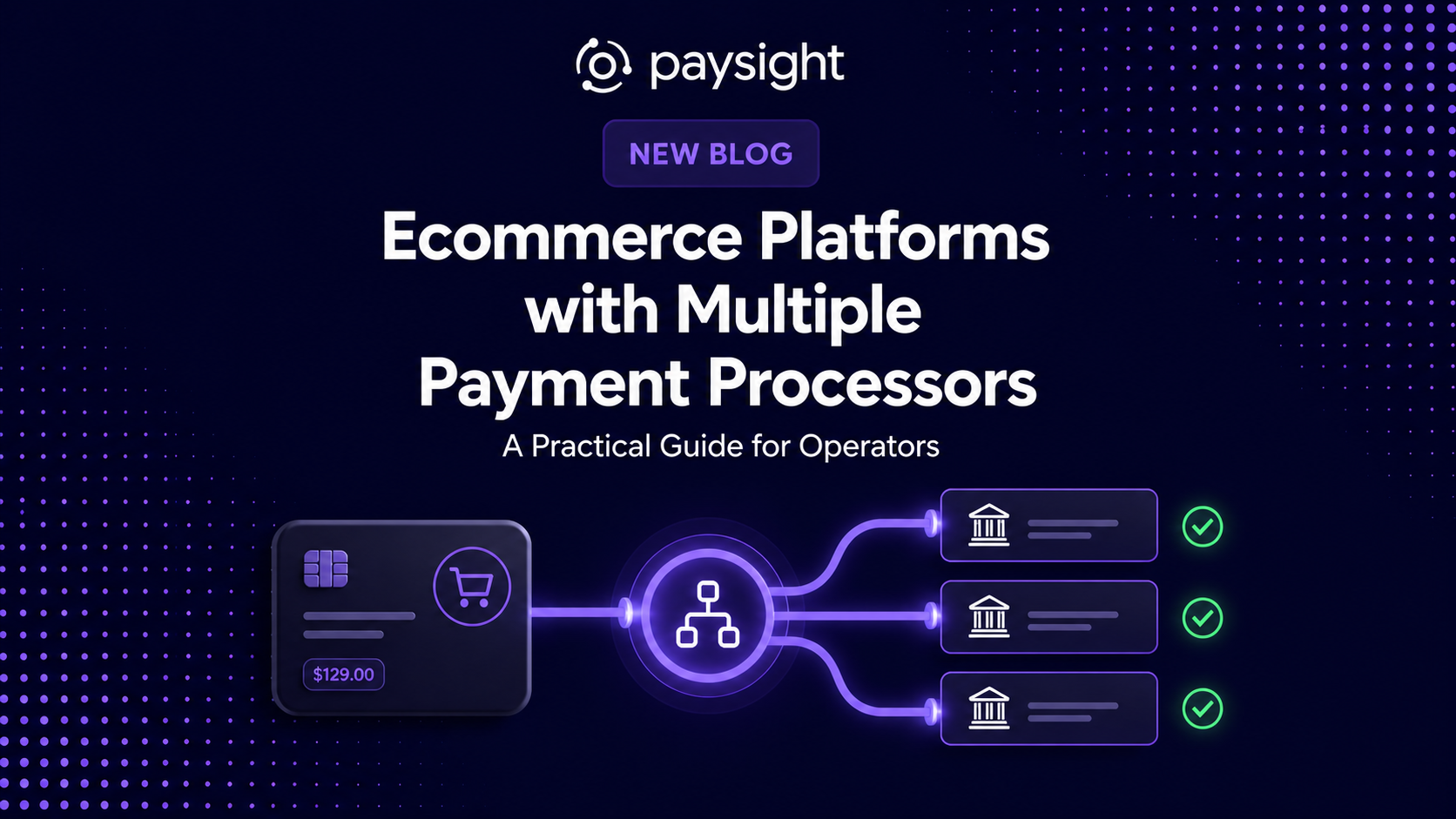
For stores evaluating platform limitations first, our guide to ecommerce platforms with multiple payment processors covers the available architecture patterns.
What about Shopify Payments, Stripe, and NMI?
These products sit in different parts of the stack, but their features can overlap.
Shopify describes Shopify Payments as its own payment gateway and allows merchants to activate supported third-party providers and payment methods subject to plan, market, fee, and feature constraints. For many stores, Shopify Payments is effectively a bundled payment environment: the merchant does not need to manage every underlying technical relationship.
Stripe similarly combines gateway, processing, acquiring connections, tokens, fraud tools, billing, and reporting in one broad platform. Used alone, it is still one primary provider relationship. Stripe now also offers an orchestration product for routing to supported third-party processors, which illustrates how the market boundary has blurred.
NMI is a gateway that supports multiple MIDs and processor services, including transaction-routing features. It can be a strong intermediate architecture for merchants that need more merchant-account control without introducing a separate orchestration layer.
Paysight sits at the orchestration level. It is designed to coordinate processors, acquirers, MIDs, gateways, and supporting payment services while keeping routing rules and transaction visibility above any single connection.
The label matters less than the control test:
- Can you connect genuinely independent routes?
- Can you choose among them using your rules?
- Can credentials move where they need to move?
- Can you recover safely after a failure?
- Can you reconcile the entire transaction from one place?
If the answer is no, the stack may be multi-MID or multi-provider without yet being fully orchestrated.
How Paysight supports the next step after multiple MIDs
Paysight's payment orchestration platform gives ecommerce merchants a control layer across processors, acquirers, gateways, and MIDs.
That includes the practical tools operators need after the first stage of diversification:
- Rules-based and performance-aware routing
- Traffic distribution and MID management
- Controlled cascading, retries, and recovery
- Payment-method and token lifecycle support
- Centralized transaction history and reporting
- Connections to subscriptions, chargeback alerts, account updating, and other payment operations
The objective is not to make the payment stack look impressive on an architecture diagram. It is to reduce unnecessary dependency, make each eligible payment take a sensible path, and give the team enough visibility to improve revenue without breaking checkout.
Choose the level of complexity that solves the real problem
A gateway is not the beginner version of orchestration, and orchestration is not automatically better. They solve different layers of the payment problem.
If one gateway and one provider serve the business well, keep the system simple. If you have already added MIDs, processors, entities, or recovery tools and the connections are becoming harder to control, orchestration may be the missing layer.
The useful progression is straightforward: diversify the commercial relationships, diversify the technical routes where needed, then coordinate them through one decision and reporting layer.
If you want to map your current gateway, MID, processor, and token setup—and identify whether orchestration would actually solve anything—talk to Paysight.
A payment gateway connects a checkout or billing system to payment processing and may provide tokens, routing, fraud tools, and reporting within its environment. Payment orchestration is a control layer across multiple gateways, processors, acquirers, MIDs, and payment services. It coordinates route selection, recovery, credentials, and transaction visibility across those connections.
No. Payment orchestration normally connects to gateways and processors rather than replacing them. The gateway continues transporting payment requests and responses, while the orchestration layer decides which eligible route to use and coordinates the surrounding workflow.
No. Multiple MIDs diversify merchant accounts and can support volume distribution or separation by entity, brand, product, or risk profile. If those MIDs remain behind one gateway, the merchant may still depend on that gateway's integration, vault, routing capabilities, and availability. Orchestration can coordinate MIDs across multiple independent payment routes.
Stripe is a full-stack payment service provider that combines gateway, processing, acquiring connections, tokenization, fraud tools, billing, and reporting. A merchant using Stripe alone still has one primary provider relationship, although Stripe also offers orchestration for routing payments to supported third-party processors.
Shopify describes Shopify Payments as its payment gateway. For merchants it operates as a bundled payment environment inside Shopify, with checkout, processing, payouts, refunds, disputes, and supported payment methods managed through the Shopify admin. Available third-party provider combinations depend on the store's market, plan, and configuration.
Routing chooses the eligible route for the first payment attempt. Cascading determines whether a different eligible route should receive the payment after a confirmed failure. Cascading should not occur after every decline or while the first attempt has an unknown status.
Orchestration becomes useful when the merchant needs to coordinate multiple processors, gateways, acquirers, or MIDs; reduce dependency on one provider; optimize approval performance by route; support safe failover or cascading; manage portable credentials; or unify payment reporting and reconciliation. A simple store with one healthy provider may not need it yet.
.png)


.svg)





Company Reg. No. 760371
VAT No. IE4280069RH


